
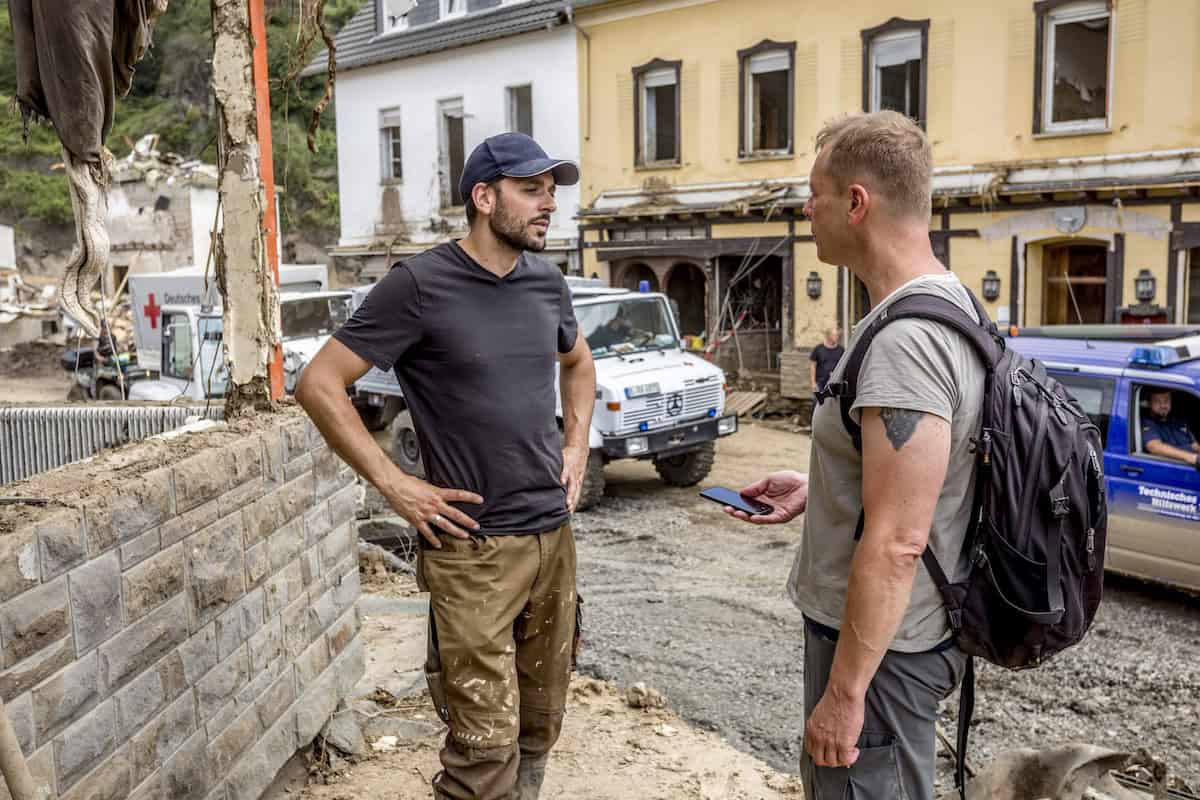
Five reporters from Zeitenspiegel conducted research in Rhineland-Palatinate, North Rhine-Westphalia, and Bavaria in recent weeks, on behalf of the Strict to speak with those affected by the flood disaster.
Beyond individual research, the team also addressed the question of how to strike a balance between currency and a cautious approach to people in extreme situations. Zeitenspiegel author, StrictCorrespondent Ingrid Eißele spoke about this in an interview with stern.de:
„From other disasters – especially
after terrorist attacks or mass shootings
– do we know how critical the hours
and days after are. That the
people are still in shock, they
actually take a certain amount of time,
to process the shock. We
want to be with people in
encountering extreme situations,
those within a few hours every
had been stripped of security.
We are not psychologists, we are not
Emergency chaplains, not helpers – so
honestly from the perspective of
fairly superfluous to those affected.
Nevertheless, almost everyone spoke with us,
that we asked for a conversation. That has
certainly also has to do with the fact that they
to talk about one's experiences to unburden oneself
wanted, but it is also a
Vote of confidence, which also tells us about
research further into the
takes responsibility. It helps when
one sometimes asks oneself: Would
I myself am affected, what would I
be able to endure? Sure, we have to
To do our job, we need
lots of information. But we carry
at the same time responsibility, and that means,
No harm to conversation partners
to add. Extremely important were:
Time, rest, and patience. Also patience
the StrictColleagues in
Hamburg, who know about the factor of time
and those to their people on the ground
trust. On some
Conversation partners
we had to wait a few days until
they found time and peace.“
The entire interview can be read here:
From the research, two cover stories emerged for the print Strict- Issue, several contributions for digital channels, as well as a large chronology of events and helper portraits for the hundred-page special issue „The Flood – Chronicle of a Foretold Disaster“.
Publications at a Glance:
Grief for the dead, anger at the authorities: „We were not warned in time.“
In Sinzig, the flood has particularly devastated one street. Twelve residents of a home died. Site visit on Pestalozzistraße. By Frank Brunner
The Horrors of the Flood Night in Bad Neuenahr: „The Screams Came from My Mother“
The father fled from Aleppo, Syria, more than 40 years ago. He found a new home in Bad Neuenahr. Now it lies in ruins. For two weeks, the entire Mardo family has been meeting every day for the reconstruction. By Frank Brunner
„Worse than war“: How a mayor is trying to rebuild his village
The day after the flood, the Rhineland-Palatinate community of Schuld resembles a field of rubble. The mayor is trying to help. But despair is great in the small community. By Frank Brunner
Title Story Strict 30/2021:
Hours that no one will forget
Small rivers turned into raging torrents last week, taking everything from many people. Contributors: Frank Brunner, Ingrid Eißele, Hannah Möller, Jelca Kollatsch
Title Story Strict 31/2021:
What remained of life
It was a disaster, and it's not over. The star hit people who have lost almost everything – except their hope. Contributors: Frank Brunner, Ingrid Eißele, Hannah Möller, Isabel Stettin
https://www.stern.de/p/plus/gesellschaft/nach-der-flut—was-vom-leben-uebrig-blieb-30633090.html
Mayor of Sinzig: „What we throw in the toilets comes out almost unfiltered”
The sewage system is gone, the power grid is overloaded, the school is destroyed. Andreas Geron, the mayor of Sinzig, like many of his administrative officials, is himself a victim of the flood. And yet, for two weeks, he has been fighting every day to get the whole of Sinzig back on its feet. A conversation about grief, inhumane burdens, and the quiet hope for better times. By Ingrid Eißele
StrictSpecial issue:
The Flood. Chronicle of a Predicted Disaster
One hundred pages about a disaster that claimed more than 180 lives. Contributing to the chronicle (starting on page 27) were: Frank Brunner, Ingrid Eißele, Hannah Möller.
https://shop.stern.de/de_DE/einzelhefte/sonderausgaben/stern-sonderheft-epaper-01-2021/2029186.html
The heroes and helpers: Faces of humanity
The mud was still wet when the first ones arrived: Not just professionals, but ordinary people too, wanted to help wherever they could. The flood was followed by a wave of solidarity. Contributions by Isabel Stettin, Andrea Mertes
https://www.stern.de/panorama/gesellschaft/-fotostrecke—die-anpackenden-nach-der-flut-30638148.html
Firefighter Ernst Meyer wanted to help. That became his downfall.
He was actually retired. But where help was needed, he was there. Also on the evening of July 14th, when the water in Nettersheim in the Eifel became a deadly trap. The town mourns a man who shaped the community for decades. By Frank Brunner
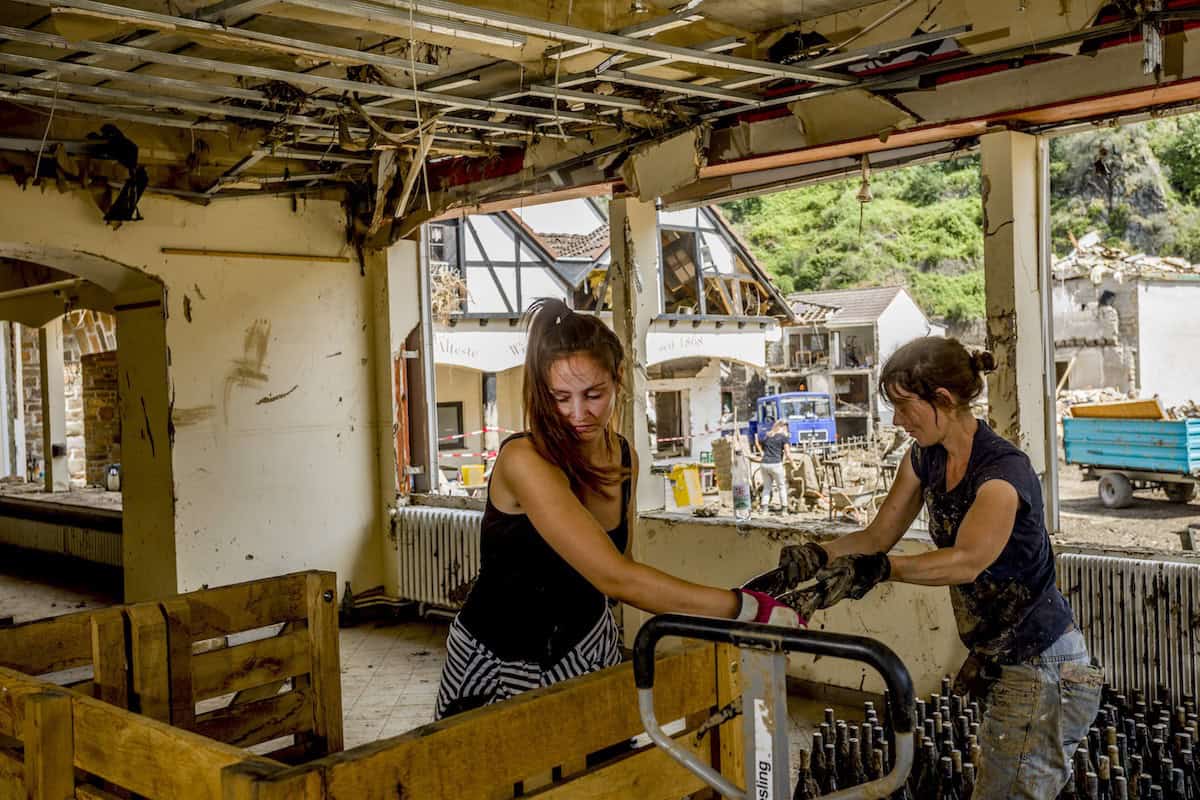
Winemakers Help in the Flood Area: The Vines of Others
They come from Baden, Hesse, or the Moselle: Many winemakers are putting aside their own work to help colleagues on the Ahr. By Frank Brunner (Photo: (c) Theo Barth)
https://www.stern.de/p/plus/gesellschaft/die-reben-der-anderen-30646294.html