
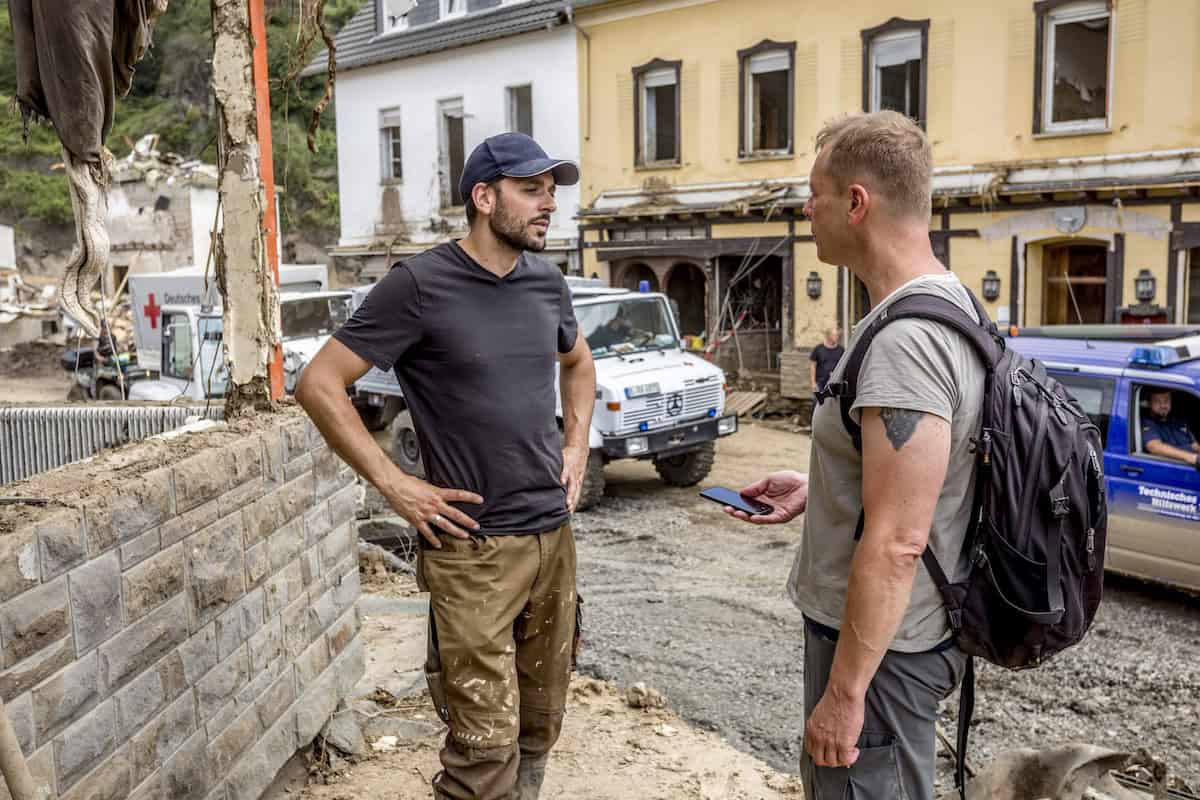
Five reporters from Zeitenspiegel conducted research in Rhineland-Palatinate, North Rhine-Westphalia, and Bavaria in recent weeks, on behalf of the Strict to speak with those affected by the flood disaster.
Beyond individual research, the team also addressed the question of how to strike a balance between currency and a cautious approach to people in extreme situations. Zeitenspiegel author, StrictCorrespondent Ingrid Eißele spoke about this in an interview with stern.de:
„From other disasters – especially
after terrorist attacks or mass shootings
– do we know how critical the hours
and days after are. That the
people are still in shock, they
actually take a certain amount of time,
to process the shock. We
want to be with people in
encountering extreme situations,
those within a few hours every
had been stripped of security.
We are not psychologists, we are not
Emergency chaplains, not helpers – so
honestly from the perspective of
fairly superfluous to those affected.
Nevertheless, almost everyone spoke with us,
that we asked for a conversation. That has
certainly also has to do with the fact that they
to talk about one's experiences to unburden oneself
wanted, but it is also a
Vote of confidence, which also tells us about
research further into the
takes responsibility. It helps when
one sometimes asks oneself: Would
I myself am affected, what would I
be able to endure? Sure, we have to
To do our job, we need
lots of information. But we carry
at the same time responsibility, and that means,
No harm to conversation partners
to add. Extremely important were:
Time, rest, and patience. Also patience
the StrictColleagues in
Hamburg, who know about the factor of time
and those to their people on the ground
trust. On some
Conversation partners
we had to wait a few days until
they found time and peace.“
The entire interview can be read here:
From the research, two cover stories emerged for the print Strict- Issue, several contributions for digital channels, as well as a large chronology of events and helper portraits for the hundred-page special issue „The Flood – Chronicle of a Foretold Disaster“.
Publications at a Glance:
Grief for the dead, anger at the authorities: „We were not warned in time.“
In Sinzig, the flood has particularly devastated one street. Twelve residents of a home died. Site visit on Pestalozzistraße. By Frank Brunner
The Horrors of the Flood Night in Bad Neuenahr: „The Screams Came from My Mother“
The father fled from Aleppo, Syria, more than 40 years ago. He found a new home in Bad Neuenahr. Now it lies in ruins. For two weeks, the entire Mardo family has been meeting every day for the reconstruction. By Frank Brunner
„Schlimmer als im Krieg“: Wie ein Bürgermeister versucht, sein Dorf wieder aufzubauen
Am Tag nach dem Hochwasser gleicht das rheinland-pfälzische Schuld einem Trümmerfeld. Der Bürgermeister versucht zu helfen. Doch die Verzweiflung in der kleinen Gemeinde ist groß. Von Frank Brunner
Titelgeschichte Strict 30/2021:
Stunden, die niemand vergessen wird
Es waren kleine Flüsse, die in der vergangenen Woche zu Wasserwalzen wurden – und vielen Menschen alles nahmen. Mitarbeit: Frank Brunner, Ingrid Eißele, Hannah Möller, Jelca Kollatsch
Titelgeschichte Strict 31/2021:
What remained of life
Es war eine Katastrophe und sie ist nicht vorbei. Der stern traf Menschen, die fast alles verloren haben – nur ihre Hoffnung nicht. Mitarbeit: Frank Brunner, Ingrid Eißele, Hannah Möller, Isabel Stettin
https://www.stern.de/p/plus/gesellschaft/nach-der-flut—was-vom-leben-uebrig-blieb-30633090.html
Bürgermeister von Sinzig: „Was wir in die Toiletten werfen, kommt fast ungefiltert wieder raus”
Die Kanalisation ist weg, das Stromnetz überlastet, die Schule zerstört. Andreas Geron, Bürgermeister von Sinzig, ist wie viele seiner Verwaltungsbeamten selbst Opfer der Flut. Und kämpft seit zwei Wochen trotzdem jeden Tag darum, dass ganz Sinzig wieder auf die Füße kommt. Ein Gespräch über Trauer, unmenschliche Belastungen und die leise Hoffnung auf bessere Zeiten. Von Ingrid Eißele
Strict-Sonderheft:
Die Flut. Chronik einer angekündigten Katastrophe
Hundert Seiten über eine Katastrophe, die mehr als 180 Menschen das Leben kostete. An der Chronik (ab Seite 27) arbeiteten mit: Frank Brunner, Ingrid Eißele, Hannah Möller.
https://shop.stern.de/de_DE/einzelhefte/sonderausgaben/stern-sonderheft-epaper-01-2021/2029186.html
Die Helden und Helfer: Gesichter der Mitmenschlichkeit
Der Schlamm war noch nass, als die Ersten kamen: Nicht nur Profis, auch ganz normale Menschen wollten helfen, wo immer sie konnten. Auf die Flut folgte eine Welle der Solidarität. Mitarbeit: Isabel Stettin, Andrea Mertes
https://www.stern.de/panorama/gesellschaft/-fotostrecke—die-anpackenden-nach-der-flut-30638148.html
Der Feuerwehrmann Ernst Meyer wollte helfen. Das wurde ihm zum Verhängnis
Eigentlich war er pensioniert. Aber wo Hilfe Not tat, war er zur Stelle. Auch am Abend des 14. Juli, als das Wasser in Nettersheim in der Eifel zur tödlichen Falle wurde. Der Ort trauert um einen Mann, der die Gemeinde seit Jahrzehnten prägte. Von Frank Brunner
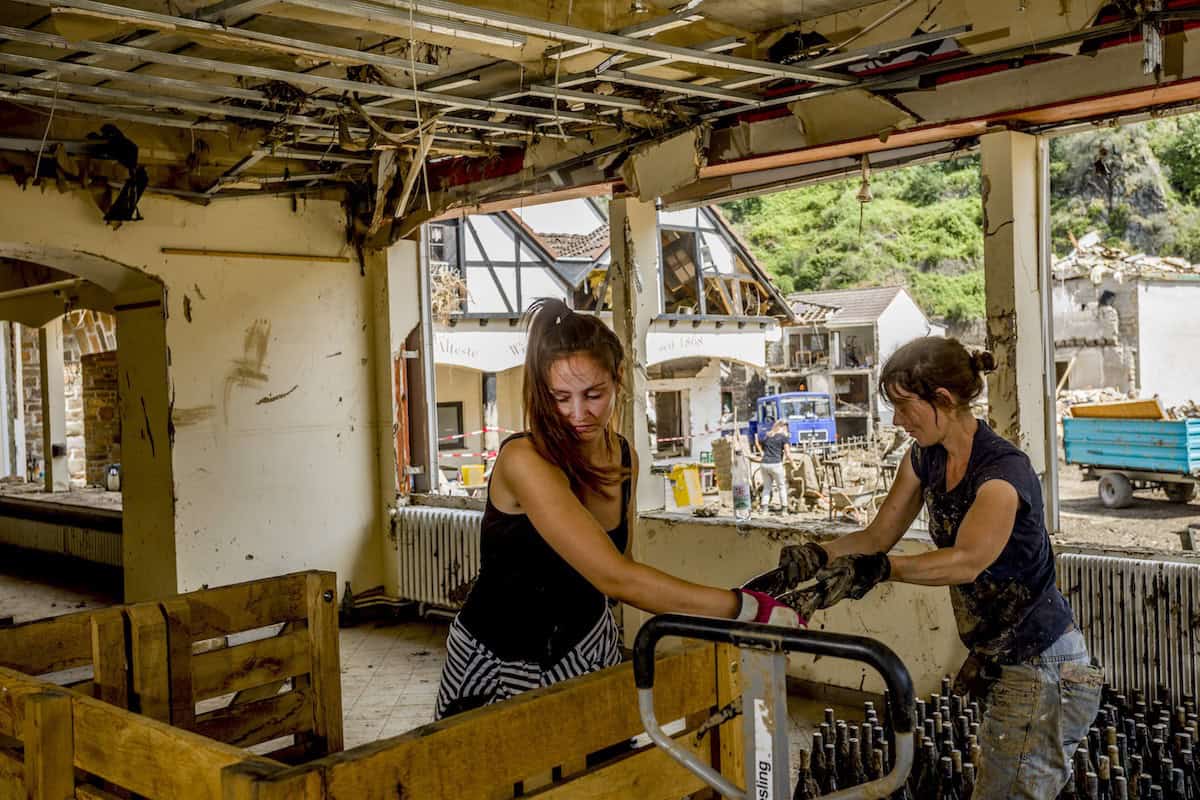
Winzer helfen im Flutgebiet: Die Reben der Anderen
Sie kommen aus Baden, Hessen oder von der Mosel: Viele Winzer lassen die eigene Arbeit liegen, um den Kollegen an der Ahr zu helfen. Von Frank Brunner (Foto: (c) Theo Barth)
https://www.stern.de/p/plus/gesellschaft/die-reben-der-anderen-30646294.html