
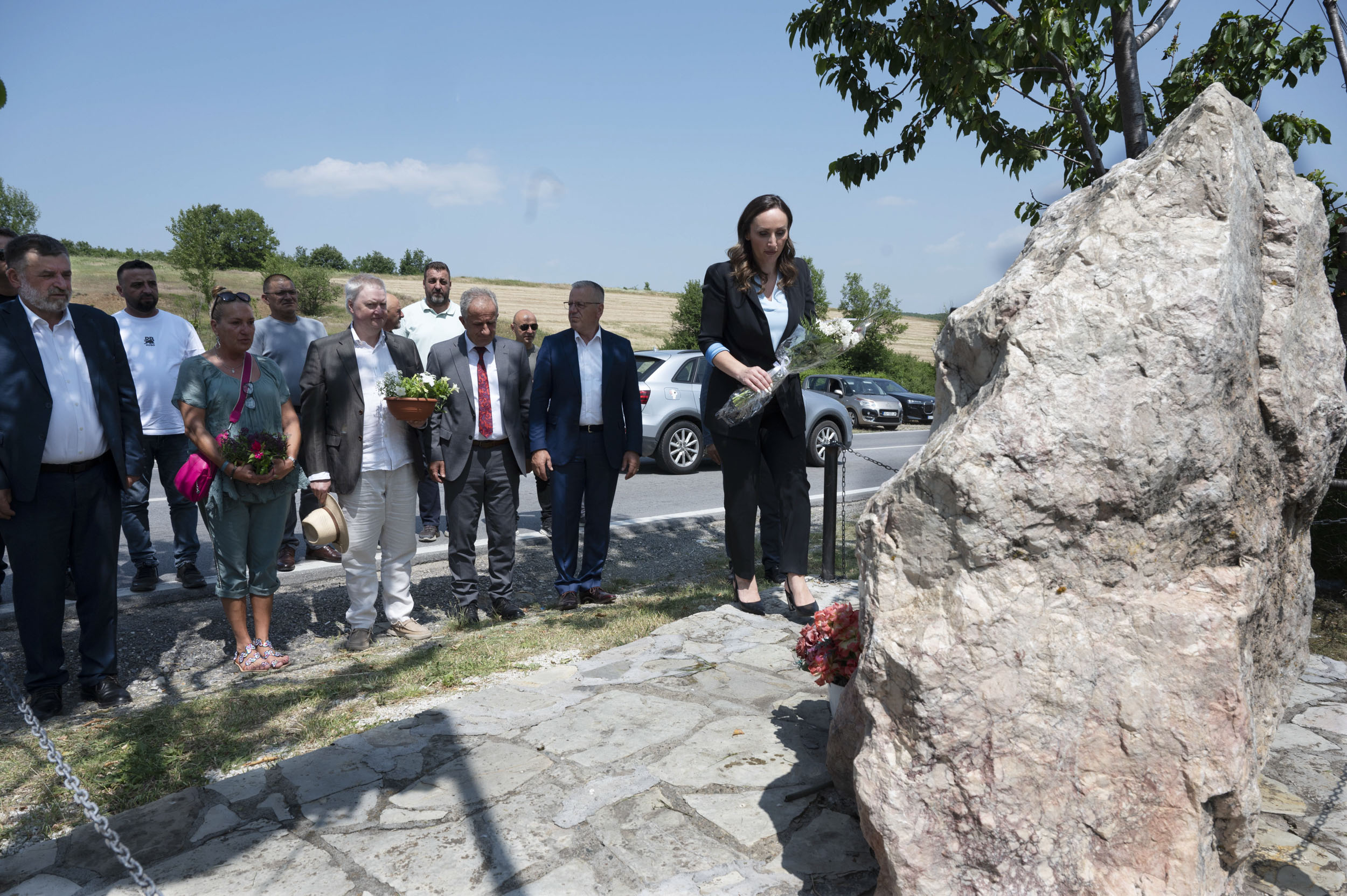
On June 13, 1999, Gabriel Grüner, a close companion of the agency Zeitenspiegel, was shot and killed along with photographer Volker Krämer and translator Senol Alit at the Dulje Pass in Kosovo. Uli Reinhardt, co-founder and longtime managing director of Zeitenspiegel, has traveled to the scene every year on the anniversary of their deaths ever since. Here is his report.
Why does one become a journalist? 40 years ago, on May 1, 1985, Zeitenspiegel was founded. 36 years ago, in 1989, Gabriel Grüner met Zeitenspiegel and its foundational paradigms at the time: solidarity, fearlessness, and perseverance. These were also his own. He applied among two and a half hopefuls for one of the 25 spots at the Henri-Nannen-Schule. Zeitenspiegel tried its hand at magazine journalism without any connections or advocates.

On June 13, 1999, Gabriel was shot and killed along with photographer Volker Krämer and translator Alit Senol at the Dulje Pass in Kosovo. On the first day of the ceasefire of the concluding Kosovo war, Russian mercenary Alexander Chernomatschenzew unleashed his frustration and killed some of those he believed were responsible for his side losing the war there.
Gabriel's son Jakob was born three months later. For him, he wanted to interrupt his career, or at least return to his original themes: literature, art, culture, music. Reporting on catastrophes and wars had not been his goal. But as a political person, he soon recognized what reporting on them could achieve. The Stuttgart professor Kurt Weidemann once put it this way: It is the democratization of art. It is capable of changing things, at least faster than culture in museums and readings.
Gabriel had great respect for Zeitenspiegel. He came by frequently. To the annual general meetings, to the celebrations, to discussions about our direction and major themes. Although he wasn't a member, he was one of us in the best sense of the word.
Every year, a delegation makes the winding ten-kilometer journey from Suhareke in Kosovo up to the Dulje Pass. Twenty-five years ago, at the beginning, it was a handful of people living there. People whom Gabriel and his colleagues didn't know personally, but who were grateful for their reporting. Today, those from back then are still participating, but now also the mayor of Suhareke and members of the municipal council, members of the Kosovo government, and this year, a German soldier, who drove the deceased Volker Krämer from the Dulje Pass to the Bundeswehr base in her vehicle.
The then kilometer-long convoy of advancing German armed forces halted in unclear territory in the middle of the night to recover Volker. A measure that caused some internal head-scratching, but was actually an expression of appreciation for the individual.
That was 26 years ago. Most members of Zeitenspiegel don't know Gabriel and have never experienced him. And yet, it's sometimes healthy to realize the ground you stand on.